BotPsy Tests How Far a 0.8B On-Device Tool Agent Can Go
BotPsy targets local function calling with a compact 0.8B-parameter model. Its reported results are promising, but the most useful lesson is how to scope, test, and contain small agents before giving them access to real tools.

Treat BotPsy as a candidate for tightly scoped local tool routing, and validate each workflow with simulations, external policy checks, and explicit action limits.
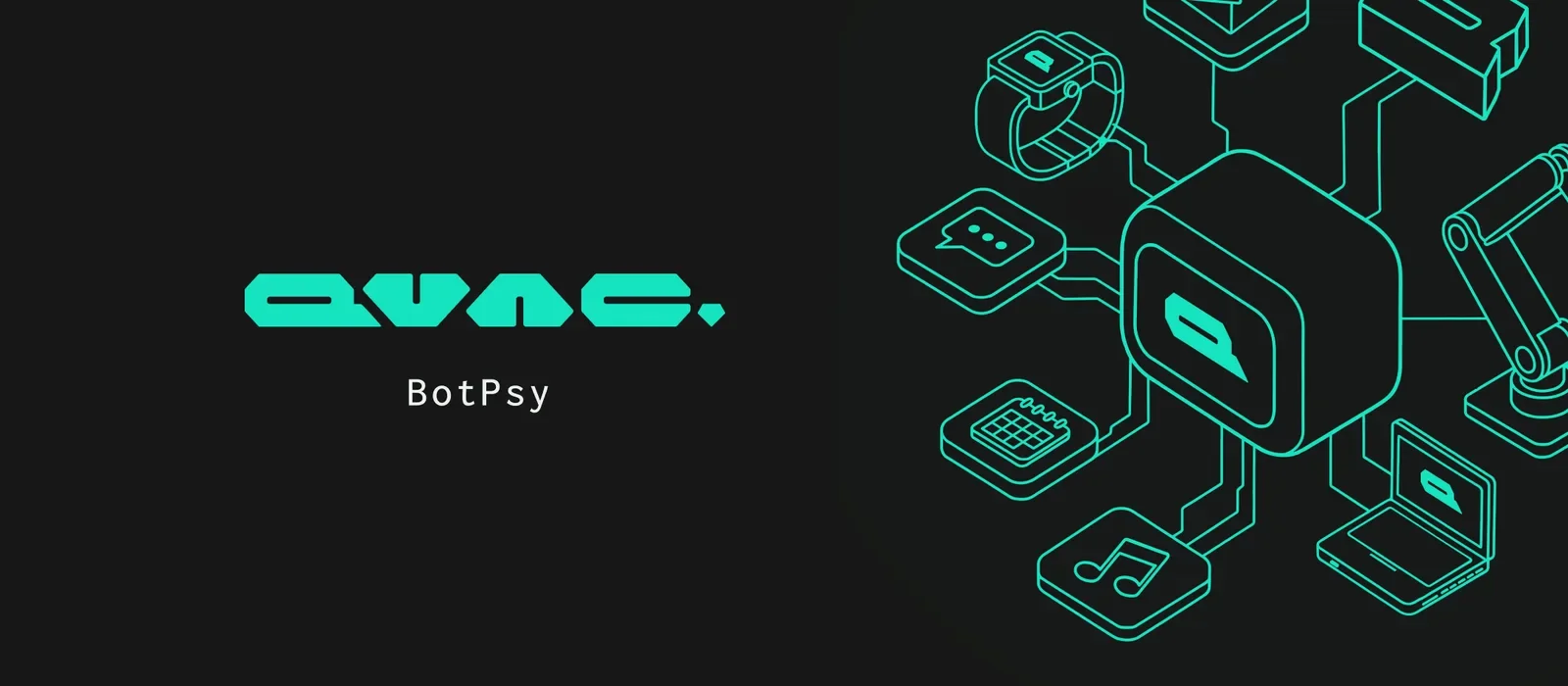
BotPsy is a new 0.8B-parameter language model aimed at function calling and agent workflows that can run on a user-controlled device. Built from Qwen3.5-0.8B, it is positioned as a compact assistant for actions such as calendar updates, file operations, messaging, device controls, and structured information lookup. That combination is interesting because an agent does not merely need to produce fluent text: it must select the correct tool, fill its arguments, preserve state across steps, and decline to act when the available tools do not fit.
The release reports large gains over its base model across several tool-use benchmarks, alongside GGUF and safetensors formats in multiple precisions. Those figures make BotPsy a useful candidate for experimentation, but they do not turn a sub-billion-parameter model into a general autonomous operator. The practical value lies in matching a narrow workflow to the model's demonstrated strengths, then surrounding it with deterministic controls.
Why a small local agent is appealing
Keeping inference close to the user can reduce how much sensitive context must leave a device. It may also avoid a network round trip and make costs more predictable for frequent, simple actions. A compact model can therefore be a good routing layer between natural-language requests and a limited catalog of functions.
The strongest use case is not an unconstrained digital employee. It is a bounded interpreter. Imagine an alarm application exposing create_alarm, list_alarms, and cancel_alarm. The model translates “wake me at seven on weekdays” into a proposed structured call, while ordinary application code validates the time zone, recurrence, and identifier. The app can show the proposal before committing it. Here the model handles linguistic variation; the application retains authority.
This division also makes failures easier to diagnose. If a call has the wrong argument, developers can inspect the schema, prompt, and model output separately from the execution layer. Local inference does not remove security risks, but a small permission surface can make those risks easier to contain.
Reading the reported results carefully
The authors report that BotPsy scored 44.0 on BFCL v4, 58.7 on ACEBench, and 51.5 on their aggregate of tau benchmarks, compared with 23.4, 30.1, and 23.2 for the base model. They also report improvements in cases where no suitable tool exists. These are meaningful signals that post-training changed tool behavior rather than only prose quality.
Yet benchmark leadership is always conditional on the evaluation setup, model set, prompts, tool definitions, and scoring rules. Absolute weaknesses matter as much as rankings. The release identifies open-ended research and complex information retrieval as difficult: its BrowseComp-Plus result is 4.5, despite leading the tested group. It also trails the tested 2B model on some web-search, memory, and exceptional-request cases. A higher relative score can still be inadequate for production automation.
The training recipe helps explain the capability profile. Supervised examples establish call patterns, specialist-teacher distillation restores broader instruction following and knowledge, and reinforcement-learning stages reward verifiable structure and task outcomes. This is a sensible recipe for a compact specialist, but it does not guarantee reliability on tool schemas or environments absent from training.
A practical evaluation ladder
Teams evaluating BotPsy should begin with replay, not live execution. Assemble representative requests, ambiguous phrasings, missing parameters, conflicting instructions, and requests for unavailable actions. Record whether the model chooses the right function, produces schema-valid arguments, asks for necessary clarification, and abstains appropriately. Split results by workflow rather than relying on one average.
Next, run the model against a simulated tool environment. Include expired identifiers, empty search results, timeouts, duplicated messages, reordered responses, and malicious text returned by a tool. Measure the complete trajectory: a correct first call is insufficient if the model loops, loses state, or acts on an instruction embedded in retrieved content. Set explicit ceilings for steps, tokens, retries, and elapsed time.
Only then consider a shadow mode beside a real application. The agent can generate proposed actions while a trusted path handles the actual request. Comparing proposals with human or deterministic outcomes reveals distribution-specific errors without granting write access. Promotion to execution should happen separately for each tool and argument class.
Guardrails belong outside the model
A local model should never be the sole security boundary. Give it opaque, narrowly scoped tool handles instead of raw credentials. Validate every argument against a strict schema and business rules. Make destructive or consequential actions require confirmation, and use idempotency keys so retries cannot duplicate payments, messages, or bookings. Keep an audit record of the user request, proposed call, policy decision, tool result, and final response.
Tool output must also be treated as untrusted data. Web pages, documents, and messages can contain text that attempts to redirect the agent. The runtime should separate tool data from governing instructions and restrict which subsequent actions may follow from retrieved content. For sensitive domains involving money, health, personal data, or safety, the release itself says the model is not intended for high-stakes automated decisions.
The right deployment question
The useful question is not whether a 0.8B model can replace a frontier assistant. It is whether a particular low- or medium-complexity workflow can be expressed with a small tool set, verified outputs, and a safe fallback. BotPsy's reported results suggest that focused post-training can make very small models substantially better at structured action. Its weak spots show why autonomy must remain proportional to evidence.
For teams willing to evaluate per workflow, local agents offer an attractive architecture: language understanding at the edge, deterministic policy in the application, and explicit user control at consequential boundaries. That is a narrower promise than a universal personal assistant, but it is also a more deployable one.
Source: BotPsy: On-Device Personal Assistant with a Sub-Billion-Parameter Agentic Language Model ↗. How we write