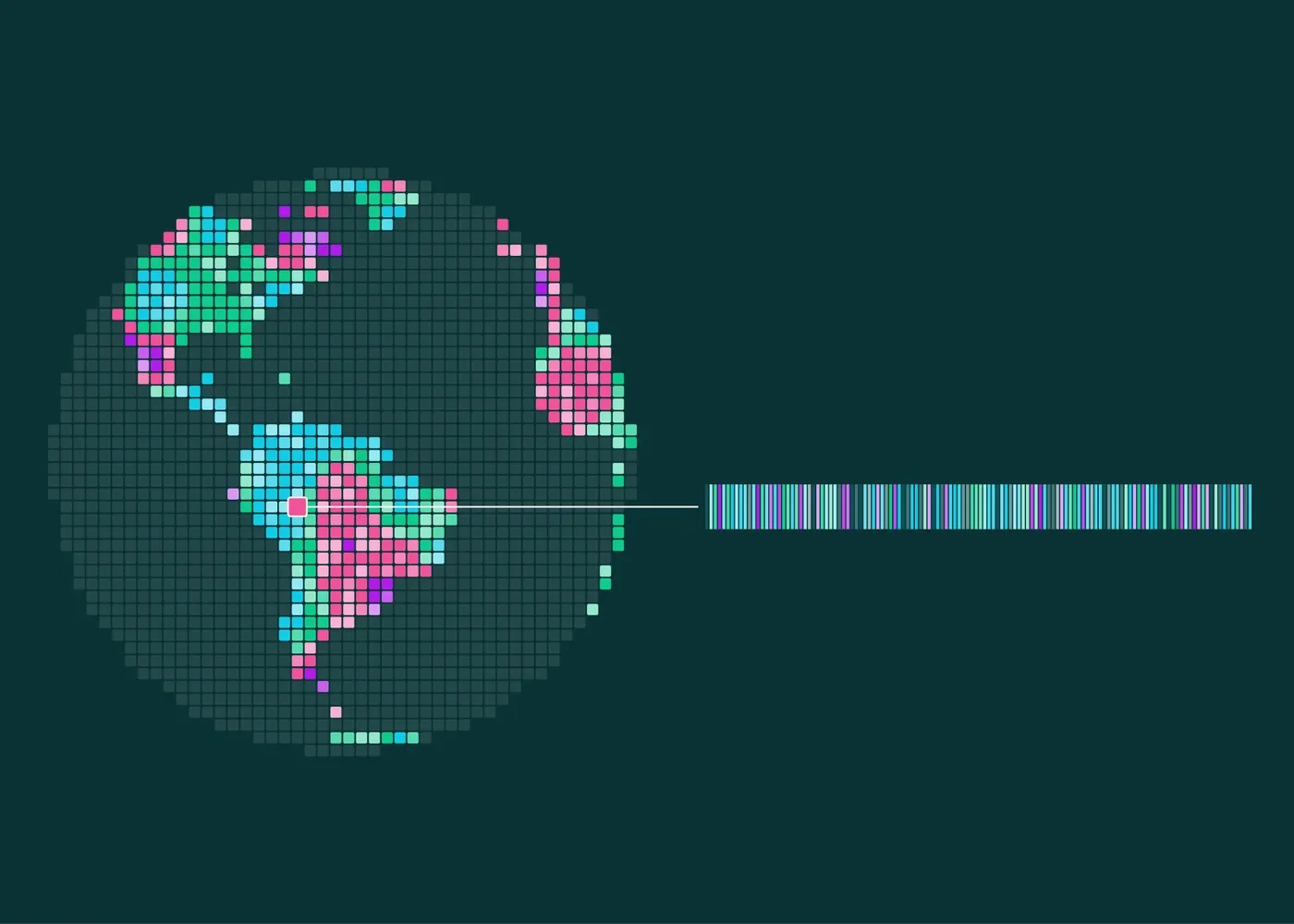
SigLIP 2 improved the building blocks of multimodal search
Google’s vision-language encoders combined multilingual training with stronger visual representations.


Multimodal applications improve when the representations underneath them improve—not only when the final generator gets bigger.
The SigLIP 2 release extended the original family with additional training objectives for semantics, localization, and dense visual features. Its announcement described improvements across classification and image-text retrieval, as well as a dynamic-resolution variant for inputs sensitive to aspect ratio.
An encoder is often infrastructure inside another product, so its importance can be less visible than a new chatbot. Better representations can improve how a system matches images with text or supplies visual features to another model. The right evaluation therefore depends on the downstream task.
Inspect the available checkpoint sizes and resolution conventions before choosing one. Reproduce the relevant retrieval or classification example, then evaluate with images shaped like your production inputs rather than assuming every variant handles them identically.
Image-text matching is a building block, not a finished answer
A representation model that connects images and text can support search, classification and other multimodal workflows. It helps compare visual material with language, but a similarity score is not the same as a verified statement about an image.
For an image-search application, the useful result is a relevant asset that a person can inspect. For a classifier, the useful result depends on the candidate labels and the decision rule. The same underlying representations can behave differently in those two systems.
Design the evaluation around the intended distinction
A broad category such as “dog” is easier to test than a subtle product or scene requirement. Include examples that differ in the detail users care about: object count, colour, context or a small visible feature. Visually similar negative examples can reveal weaknesses that a random collection of unrelated images will not.
Keep a baseline based on existing metadata or a simpler model. A new representation should solve a measurable retrieval or classification problem rather than replace a working approach solely because it is newer.
Preprocessing can remove the evidence
Image resizing and cropping determine what reaches the encoder. A small label or peripheral object may disappear during preprocessing. Test the complete input path with the original assets rather than only using clean centrally framed examples.
Preserve the source identifier and, where relevant, location within a document. A matched representation should lead the user back to the actual image or page that produced it.
Be careful with candidate labels
In a label-based comparison, the wording of candidate descriptions can influence the result. Test sensible alternatives and keep the chosen descriptions attached to the evaluation. Do not interpret a high score as a calibrated probability without evidence that the scoring setup supports that interpretation.
Include an option for unsupported or out-of-scope inputs where the application needs one. Selecting the nearest available label does not prove that any label is appropriate.
Measure the complete retrieval system
Embedding quality interacts with index construction, candidate retrieval and result presentation. Record query latency and index size alongside relevance. If a system uses a later reranking stage, evaluate the contribution of each stage separately.
The value of stronger image-text representations is that they can make useful visual evidence easier to locate and organize. The dependable implementation keeps preprocessing, scoring and source provenance visible, allowing the application to use the representation as a tool for finding evidence rather than as a substitute for checking what an image actually shows.
Source: SigLIP 2: A better multilingual vision language encoder ↗ · ariG23498, merve, qubvel-hf. How we write