Granite Switch 4.1.1 Tests a Software-Style Release Model for Modular AI
IBM's Granite Switch 4.1.1 updates speech recognition and decision capabilities without retraining its base model, illustrating how modular adapters can make AI releases smaller and easier to evaluate.

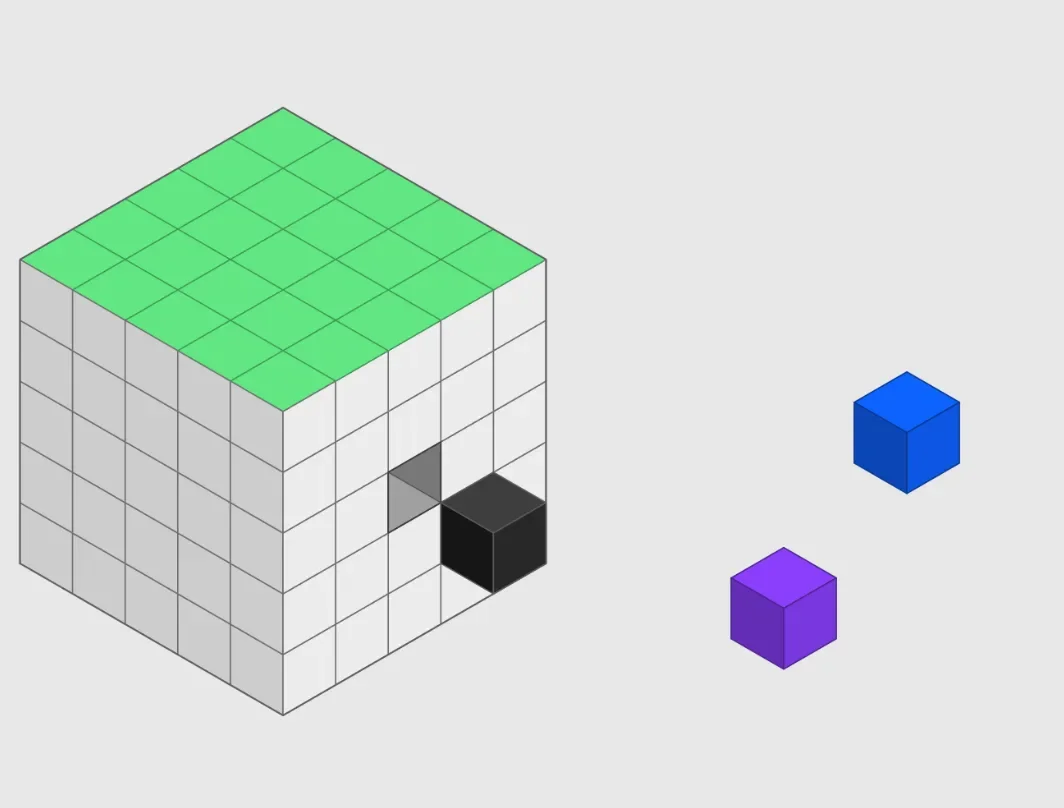
Modular model patches can reduce the scope of an upgrade, but behavioral compatibility still requires focused component tests and end-to-end regression checks.
IBM's Granite Switch 4.1.1 is a modest release with an ambitious implication: some model updates may be packaged more like software patches than full model replacements. The release updates a speech-recognition component and a decision-focused adapter while leaving the shared base model unchanged. That separation could make upgrades narrower, but it also changes what teams need to test.
The important idea is not that AI models have suddenly acquired conventional semantic-versioning guarantees. It is that a modular architecture creates a practical boundary between a stable foundation and replaceable capabilities. When that boundary is real, an update can target one function without forcing every part of a deployment to move at once.
What changed in 4.1.1
IBM describes Granite Switch 4.1.1 as backward compatible with Granite Switch 4.1, with no migration required. According to the release announcement, the patch includes an updated Granite Speech ASR model covering ten languages, with punctuation and capitalization produced natively. It also updates the Decision adapter in granitelib-core; IBM reports improved overall performance on its Jev Decision Index test set.
The company says it trained those two updated components without recomputing the base model. Users can compose the newer adapters with that existing base and deploy the resulting configuration. IBM is also working on tutorials and an Adapter SDK for developers and third parties, but those future tools should not be treated as available merely because they were previewed.
This scope matters. The announcement does not claim that every Granite capability improved, nor does it publish enough detail to infer gains for a particular production workload. It presents a patch to selected components, not a universal quality upgrade.
Why modular updates change release operations
A monolithic model upgrade creates a wide validation surface. Even if a new checkpoint targets one weakness, teams may need to repeat tests for unrelated prompts, safety controls, tool use, latency and memory behavior. The model artifact is the unit of change, so the deployment process must assume broad impact.
A modular release can narrow that surface. Consider a pipeline that turns a recorded support call into text and then routes the case. A speech adapter update might improve how the first stage formats multilingual transcripts, while the base language behavior remains fixed. The team can concentrate additional testing on language coverage, punctuation, names, numbers and the handoff into routing. It should still run a compact end-to-end regression suite, because component boundaries do not eliminate interactions, but it need not assume that every downstream behavior was intentionally redesigned.
The operational benefit is traceability. A deployment manifest could pin the base version, the speech component and the decision adapter independently. If results regress, operators have a smaller set of changed artifacts to inspect. Rollback can also be more precise, provided the serving system actually preserves compatible component versions and immutable identifiers.
Backward compatibility is a starting point, not proof
The software analogy has limits. Traditional libraries expose interfaces that can often be checked with deterministic tests. Model components expose statistical behavior. Two adapters may accept the same inputs and produce the same output shape while differing in accuracy, calibration, fairness or failure patterns. Interface compatibility therefore does not establish behavioral compatibility.
For speech recognition, native punctuation and capitalization may remove a formatting step, but they can also alter downstream tokenization or rule-based extraction. A customer identifier containing letters and digits is more consequential than a missing comma. Teams should evaluate representative audio across the languages, accents, noise conditions and domain vocabulary they actually serve. They should also compare raw text and task-level outcomes rather than relying only on an aggregate transcription score.
For a decision component, an overall benchmark improvement is useful evidence but not a deployment decision. Aggregate results can hide weaker slices or changed error costs. A practical review should separate false approvals from false rejections, inspect confidence or abstention behavior where available, and test cases close to policy boundaries. The release announcement's benchmark claim is specific to the cited test set and should not be generalized to every decision task.
A sensible evaluation checklist
Before adopting a modular patch, teams can make the release boundary explicit:
- Record exact versions for the base model and every adapter.
- Identify which artifacts changed and which remained fixed.
- Run focused tests for the updated capability, including important data slices.
- Run a smaller end-to-end regression set to catch component interactions.
- Compare operational characteristics such as latency, memory use and failure handling in the intended serving environment.
- Define rollback criteria before promotion and retain the previous component combination.
This approach treats modularity as a tool for controlling change, not a reason to skip validation. The narrower the release, the more precisely a team can assign tests and ownership.
The larger experiment
Granite Switch 4.1.1 offers an early example of versioned, composable model capabilities. If the approach expands to third-party adapters, provenance and compatibility metadata will become as important as convenience: users will need to know who trained a component, which base versions it supports, what data and evaluations underpin it, and how combinations are resolved.
The patch is therefore most interesting as an operating model. Stable foundations plus independently versioned expertise could shorten some update cycles and make regressions easier to isolate. Whether that promise holds will depend less on the version number than on disciplined manifests, targeted evaluations and honest documentation of each component's boundaries.
Source: Granite Switch 4.1.1 — Update models like you update software ↗. How we write