Cosmos 3 Turns World Models into an Evaluation Design Problem
NVIDIA’s four Cosmos 3 Nano checkpoints cover driving, simulator rendering, and bimanual robotics. The useful question is not which demo looks best, but which model boundary matches the decision loop you need to evaluate.

Choose a world-model checkpoint by its simulation boundary, then test control fidelity, cross-sensor consistency, and long-horizon drift independently of visual realism.
NVIDIA’s latest Cosmos 3 Nano release makes “world model” less useful as a single product label. Its four open-weight checkpoints occupy different positions in a simulation pipeline: one produces offline multi-sensor driving scenes, one streams driving observations, one renders RGB from simulator state, and one predicts bimanual-robot video from actions. All are described as 16-billion-parameter post-trained models under OpenMDW1.1.
That breadth creates a selection problem. A team should not begin with the most visually impressive output. It should begin by deciding which parts of its evaluation environment must remain authoritative, which observations may be generated, and how quickly an action must influence the next observation.
Start with the boundary of truth
A simulator has several possible sources of truth: physical state, geometry, sensor measurements, and pixels. The four checkpoints place the generative model at different boundaries.
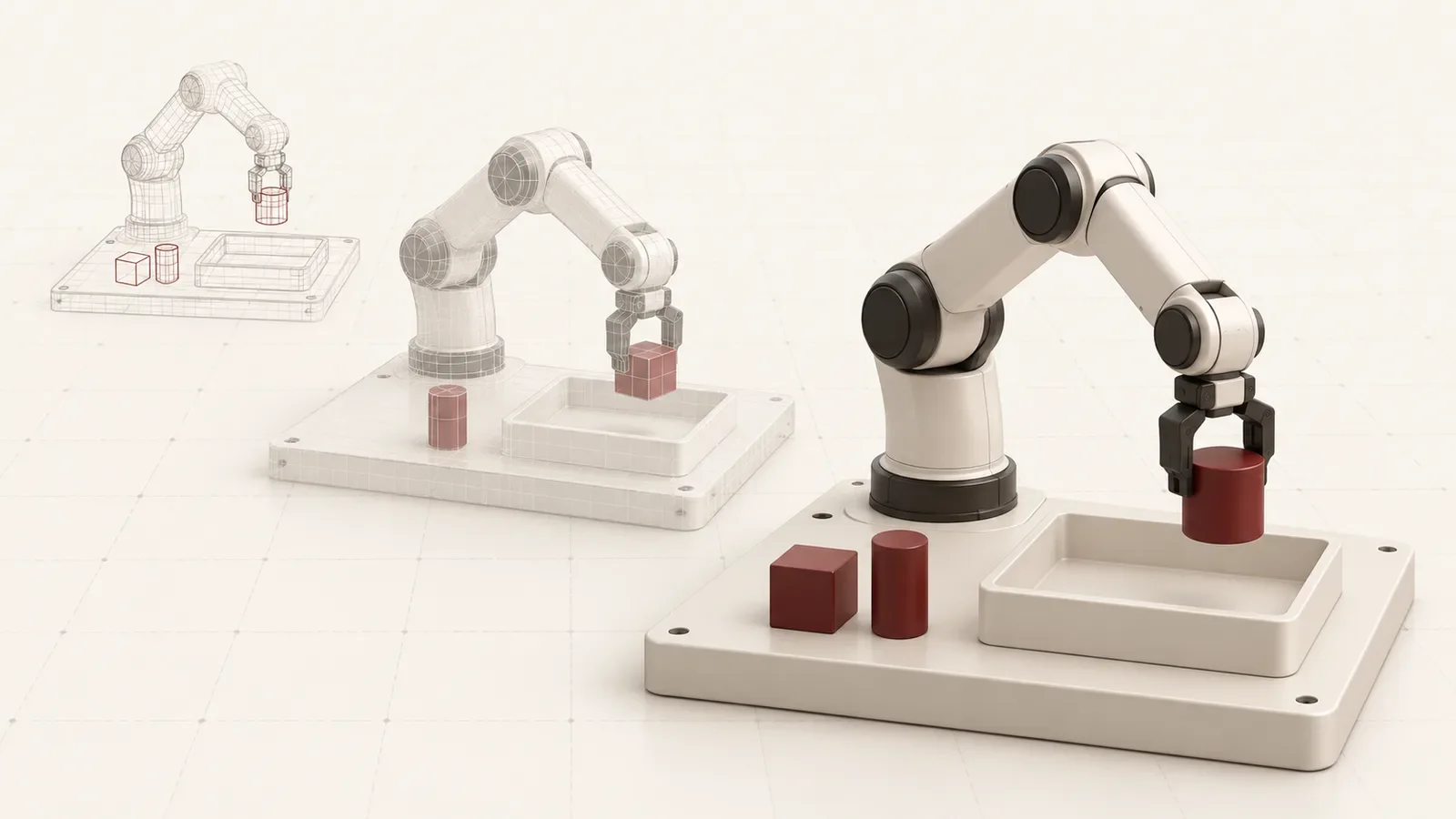
Sim-Transfer leaves motion, contacts, and state updates to a conventional simulator. It converts spatial controls such as depth, segmentation, edges, or blur into RGB observations, with text guiding appearance. This is the clearest option when physics must remain inspectable and deterministic while visual diversity is the missing ingredient. A collision or joint limit still comes from the simulator; the model changes what the policy sees.
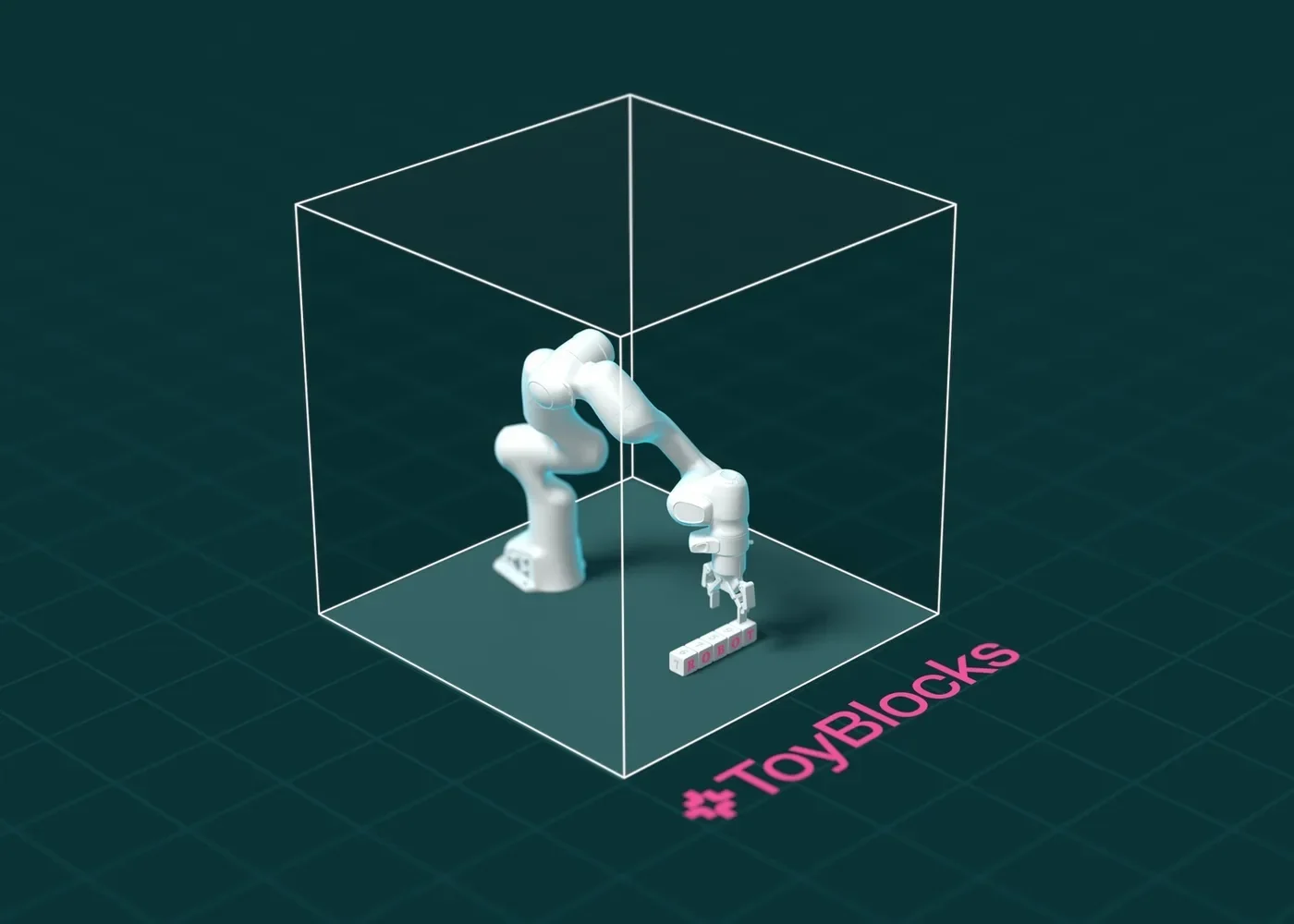
Sim-Bimanual moves the boundary closer to the policy. Given an image and robot or camera actions, it predicts subsequent visual observations directly. That can represent effects that are awkward to render, but it also means the generated video is no longer independent evidence that the commanded action physically succeeded. Evaluation therefore needs an external state signal or task-specific verifier whenever success matters beyond appearance.
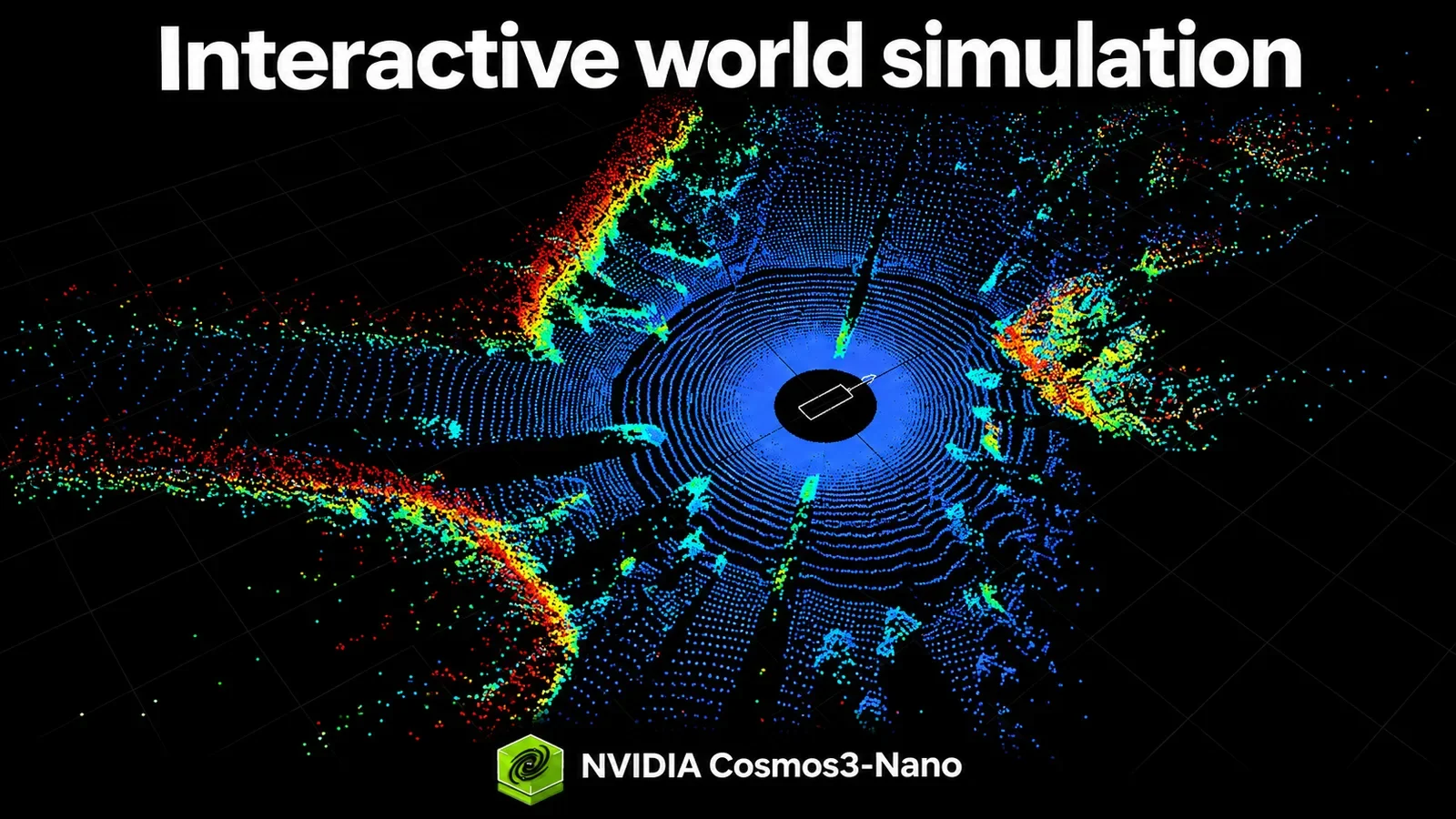
The driving pair exposes the same distinction. Transfer-Auto targets offline generation across multiple camera views, with optional joint RGB and LiDAR. Sim-Auto is its causally distilled, streaming counterpart, intended to consume updated controls and generated history. Offline augmentation and closed-loop policy testing are related uses, but they have different failure costs.
Match the checkpoint to the experiment
A useful choice can be made with three questions.
First, is the output a dataset or part of a live loop? For dataset expansion, generation can be inspected, filtered, and regenerated before training. Transfer-Auto fits that workflow. For a policy that repeatedly observes and acts, latency and temporal continuity become part of correctness; Sim-Auto or Sim-Bimanual is the closer match.
Second, must multiple sensors agree? A convincing camera frame does not establish that projected geometry, LiDAR returns, and neighboring views describe the same scene. Transfer-Auto and Sim-Auto explicitly address synchronized camera and LiDAR generation, but “synchronized” should still be tested rather than assumed. Reproject sampled points into camera views, track objects across views, and compare control changes with corresponding geometry changes.
Third, who owns dynamics? If a physics engine already provides trusted state transitions, Sim-Transfer preserves a useful division of labor: physics advances the world and generation supplies observations. If recorded action-to-observation behavior is the object of study, Sim-Bimanual offers a more direct route, provided its action schema matches the embodiment and timing.
Evaluate rollouts, not isolated frames
Streaming generation changes the test unit. A single sharp frame can hide drift that becomes decisive after many actions. Cosmos 3 uses generated history when producing later chunks, so an early error may become input to the next prediction. The reported training recipe addresses this with causal training, few-step consistency distillation, and a final self-forcing stage that exposes the student to its own generated past. That design reduces neither the need for rollout tests nor the possibility of compounding error.
Build evaluation episodes around interventions. Hold the initial scene fixed, change one control, and measure whether the expected effect appears without unrelated changes. In driving, vary a traffic signal or a vehicle trajectory while checking view and sensor consistency. In manipulation, compare small gripper, camera, and arm motions, then combine them. Include reversals and pauses; these often reveal whether a model follows controls or merely continues a plausible visual trend.
Measure degradation by horizon. Report task-relevant consistency after one chunk, several chunks, and the longest intended episode. Separate perceptual quality from control fidelity: image realism, identity persistence, geometry, action response, and task completion are different axes. A model can improve one while harming another.
Treat adaptation as a data-contract project
The release provides post-training paths, but adapting a world model is not only a training job. Camera ordering, coordinate frames, action normalization, observation timing, masks, and sensor calibration are part of the model’s contract. A pipeline that runs successfully can still teach the wrong relationship if one convention is shifted.
Before a long run, validate a tiny sample end to end. Visualize every control channel, confirm that an episode with T transitions has T+1 observations where required, and test checkpoint restart and export separately. Keep held-out episodes that represent rare but important conditions rather than only average scenes.
The release expands the available building blocks for interactive simulation, but it does not collapse simulation into one model. The practical advantage comes from assigning each component a clear responsibility—and designing evaluation so that generated realism cannot substitute for physical or control correctness.
Source: New NVIDIA Cosmos 3 Open Models for Interactive World Simulation ↗. How we write