Kumo Tabular Reframes the Baseline for Table-Based Prediction
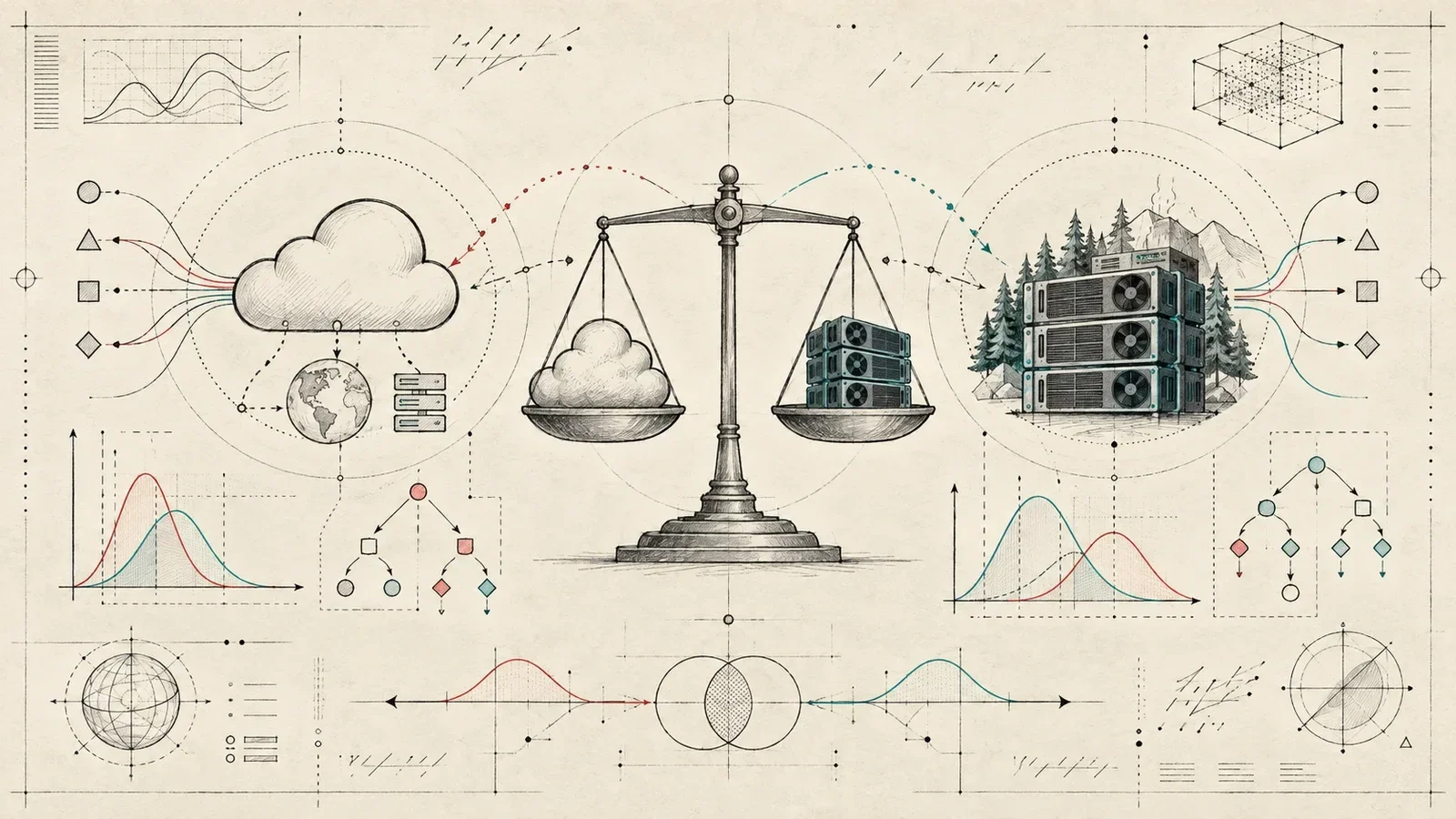
NVIDIA's Kumo Tabular brings pretrained, in-context prediction to numerical and categorical tables. The more important question is how teams should compare its fast-start workflow with tuned tree models under realistic validation.

Treat Kumo Tabular as a strong fast-start candidate, then compare it with tuned baselines using leakage-safe splits, calibration checks, shift tests, and realistic resource budgets.
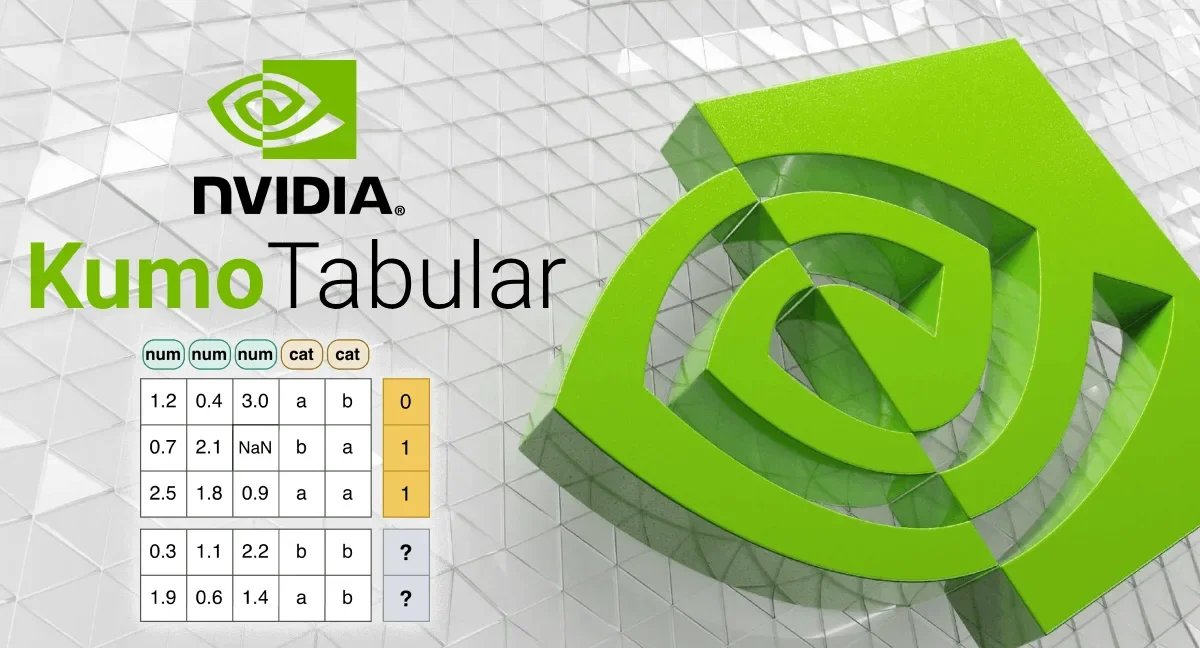
Tabular machine learning usually starts with a familiar loop: clean a dataset, choose a tree-based learner, tune it, and measure the result on a validation split. NVIDIA's Kumo Tabular proposes a different starting point. It uses labeled rows as context and predicts labels for new rows without updating model weights for each dataset. That makes it less like a conventional model training job and more like inference over an example set.
NVIDIA released the open model collection in three sizes, from 28 million to 215 million parameters, alongside a GPU-oriented library. The announcement says separate classification and regression models were pretrained entirely on synthetic tables and supports numerical and categorical inputs. It reports leading aggregate positions across TabArena, BeyondArena, TALENT, and ScoringBench. Those results make the release a serious candidate for evaluation, but leaderboard placement is not a substitute for testing the particular errors, latency, and operating constraints of a real application.
What changes when the dataset becomes context
A conventional supervised pipeline produces parameters fitted to one training set. Kumo Tabular instead receives labeled context rows and unlabeled query rows in a forward pass. The practical distinction matters. A team can potentially obtain a useful baseline without launching a hyperparameter search or maintaining a separate fitted artifact for every small prediction problem. Updating the examples in context can also be a simpler operation than scheduling retraining.
This does not eliminate the modeling lifecycle. It moves several decisions. The selection and representativeness of context rows become part of the model definition. Preprocessing still determines whether timestamps, identifiers, free text, and missingness carry useful signal or accidental leakage. Versioning must capture the model weights, library, preprocessing rules, and context data together. A prediction cannot be reproduced reliably if only the model name is recorded.
The architecture is designed around table structure. It embeds values according to their columns, combines information within rows, and then relates query rows to labeled context rows. NVIDIA also describes cache reuse for context representations, which is relevant when the same reference set serves repeated prediction batches. These design choices explain the intended efficiency, but actual throughput will depend on table shape, context size, hardware, and batching.
A fair comparison needs more than one score
The useful question is not whether a foundation model defeats every boosted tree. It is where the new workflow earns its cost. Start with the same time-based or group-aware splits that would be used for production acceptance. Random row splits can look excellent while leaking customer, device, or future information across partitions. Keep a final untouched test set and make all model-selection decisions elsewhere.
Compare at least three tracks: a simple linear or tree baseline, a carefully tuned gradient-boosted model, and Kumo Tabular with documented default settings. Give each track an explicit resource budget. Report wall-clock preparation and inference time as well as predictive quality; a fast first result can be valuable even if a longer tuning run eventually wins. For classification, inspect log loss and calibration alongside accuracy or area under the curve. For regression, pair an aggregate error metric with residual slices and tail behavior.
Repeat the experiment over several seeds or resampled splits when the dataset is small. Then segment results by operationally meaningful cohorts: rare categories, recently acquired records, missing-value patterns, and ranges near a decision threshold. Aggregate rank on broad benchmarks cannot reveal whether a model fails on the population that carries the highest business cost.
Test the boundaries deliberately
The release documents important limits. Native inputs are numerical and categorical; text, images, and timestamps require conversion into features. A forward pass directly handles up to ten classes, with the accompanying library extending larger label spaces through an encoding scheme. NVIDIA also cautions that performance can decline beyond training ranges or when query data differs from the context distribution.
Those caveats suggest concrete stress tests. Reduce the number of labeled context rows and chart the degradation. Add realistic missingness rather than uniformly blanking cells. Hold out newly appearing categories. Shift a numerical feature within plausible future ranges. Evaluate a later time period to expose drift. If probabilities drive ranking or pricing, plot calibration by cohort and establish a recalibration policy.
Uncertainty output should be evaluated rather than accepted at face value. For regression intervals, measure empirical coverage at several nominal levels and across important subgroups. For classification, check reliability diagrams and a proper scoring rule. An uncertainty estimate is useful only if its behavior is understood under the same shifts the deployed system will encounter.
Where it can fit in a production workflow
Kumo Tabular looks most immediately useful as a rapid, strong baseline and as an option for collections of modest tabular tasks where per-task tuning is expensive. It may also help teams determine whether additional feature work has measurable value: if engineered features cannot improve held-out performance or robustness, their maintenance burden deserves scrutiny.
Production adoption still requires the ordinary controls around data lineage, privacy, monitoring, fallbacks, and cost. Context rows may contain sensitive information, so access rules and retention policies apply even though the model is not fine-tuned on them. GPU availability and memory should be tested under representative concurrency. Teams should also review the OpenMDW 1.1 license against their intended use rather than treating the word open as a complete legal conclusion.
The release expands the set of credible defaults for table prediction. Its strongest contribution may be a new first experiment: evaluate a pretrained tabular model before committing to a lengthy task-specific search. The winner should still be chosen by controlled, application-specific evidence.
Source: NVIDIA Kumo Tabular Sets a New Accuracy-Efficiency Frontier for Tabular Prediction ↗. How we write