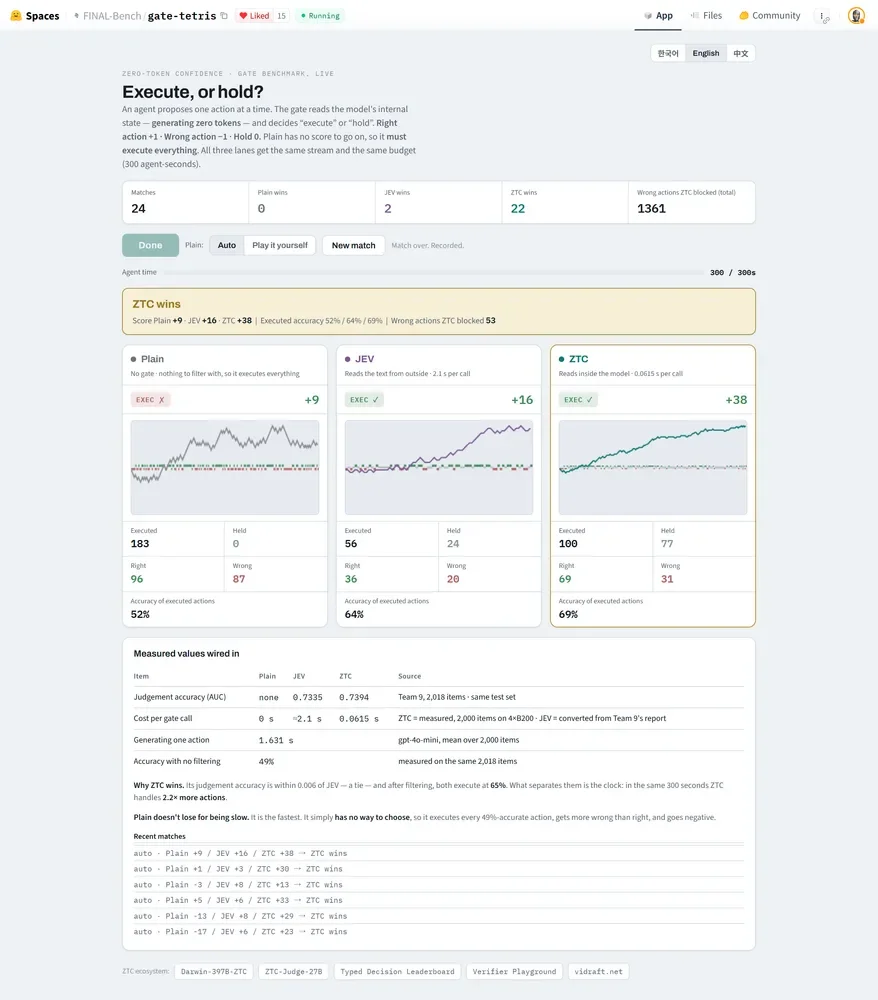
FINAL-Bench introduces Zero-Token Confidence, a calibrated probe that estimates answer correctness from a model's hidden state without generating verification tokens. The release raises useful questions about calibration, transfer, and how teams should test low-cost gates before putting them in an agent loop.
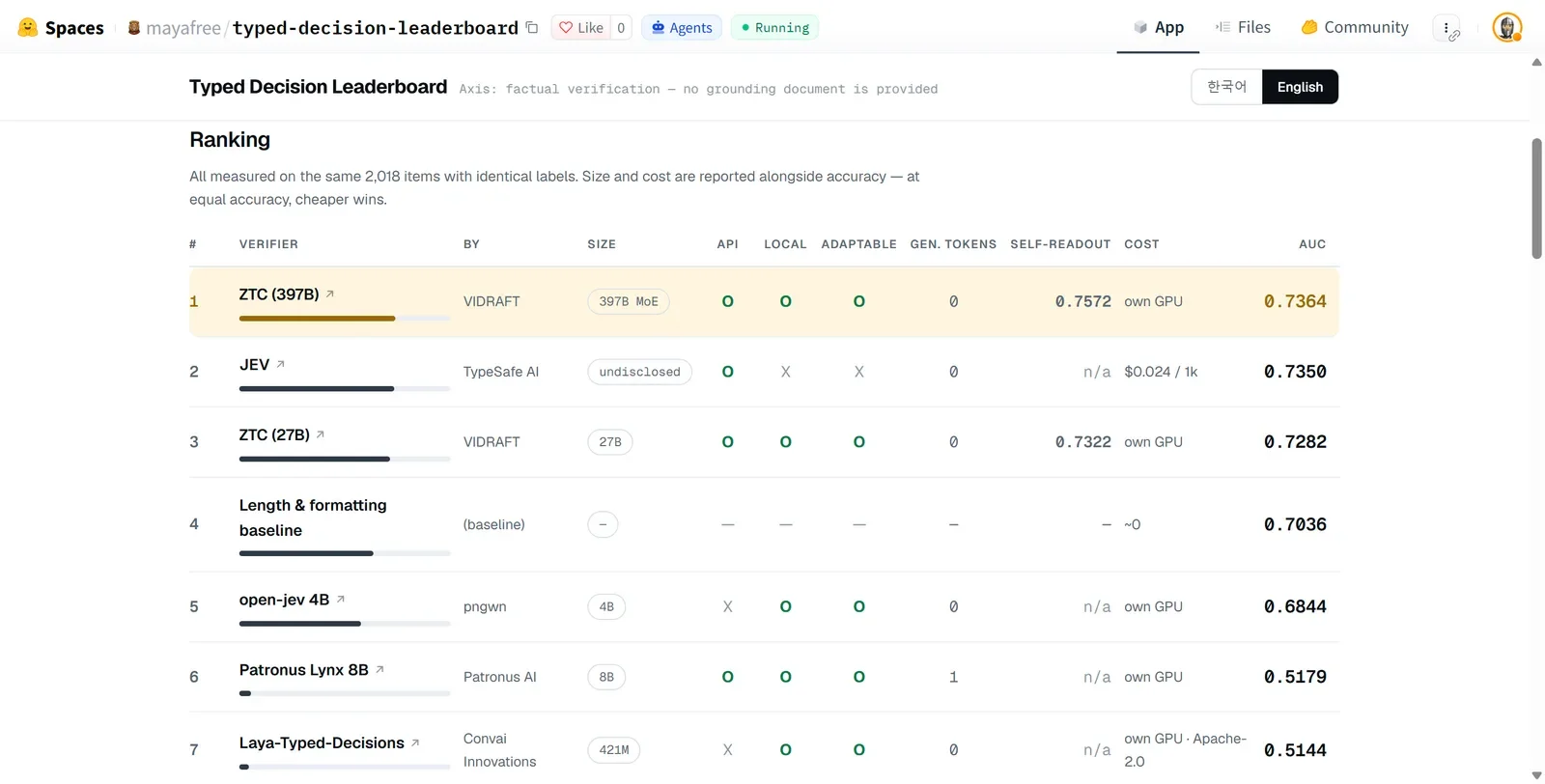
A shared comparison of typed decision models shows why answer-verification systems should be evaluated against simple baselines, deployment thresholds, and the downstream cost of unnecessary retries.
Layer-Feedback Transformer reuses neighboring blocks to perform more sequential transformations without adding parameters. Its controlled experiments are promising at two tested scales, but the design spends substantially more computation and still needs a compute-matched comparison.
Optimum Intel 2.2 and OpenVINO GenAI 2026.4 broaden local AI support, but their more important lesson is how to evaluate an end-to-end deployment path across export, compression, execution, serving, and measurement.
A 139M-parameter community model trained on 100 billion tokens offers a useful case study in judging small-model efficiency without confusing benchmark proximity with broad capability.
A September 14 community report on AutoRound offers a useful reminder: matching file sizes does not mean two quantized models preserve the same behaviour.
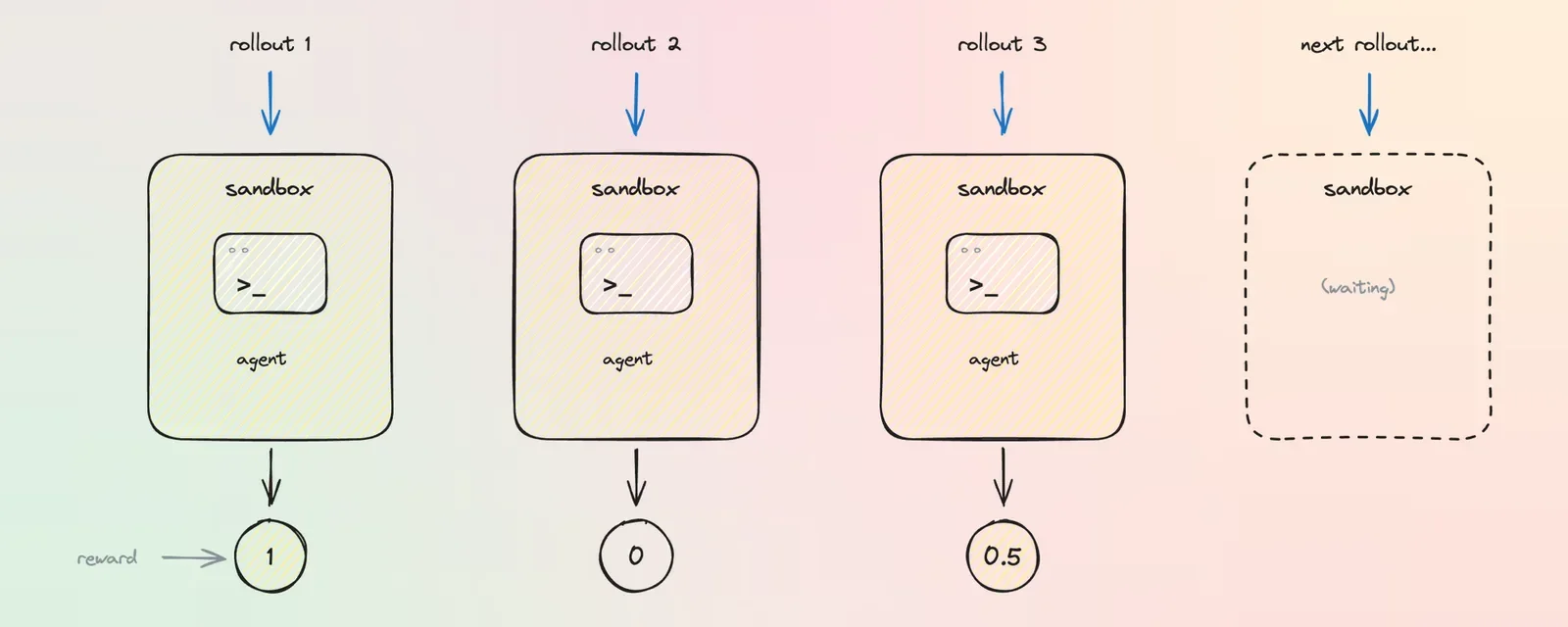
A recent Hugging Face community survey puts the execution environment at the centre of agent training. Here is how to reason about isolation, reset behaviour and reliable rewards.
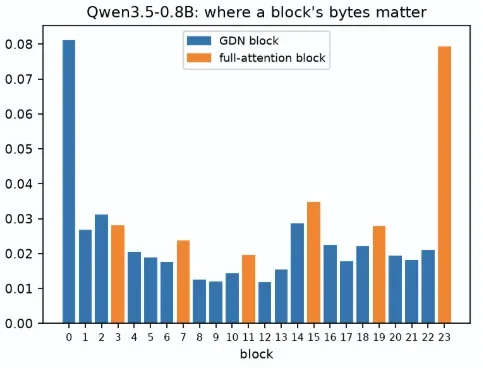
Bartowski’s September 10 experiments explore tensor-specific precision choices. The practical lesson is to compare allocation strategies at a matched memory budget and validate on your workload.
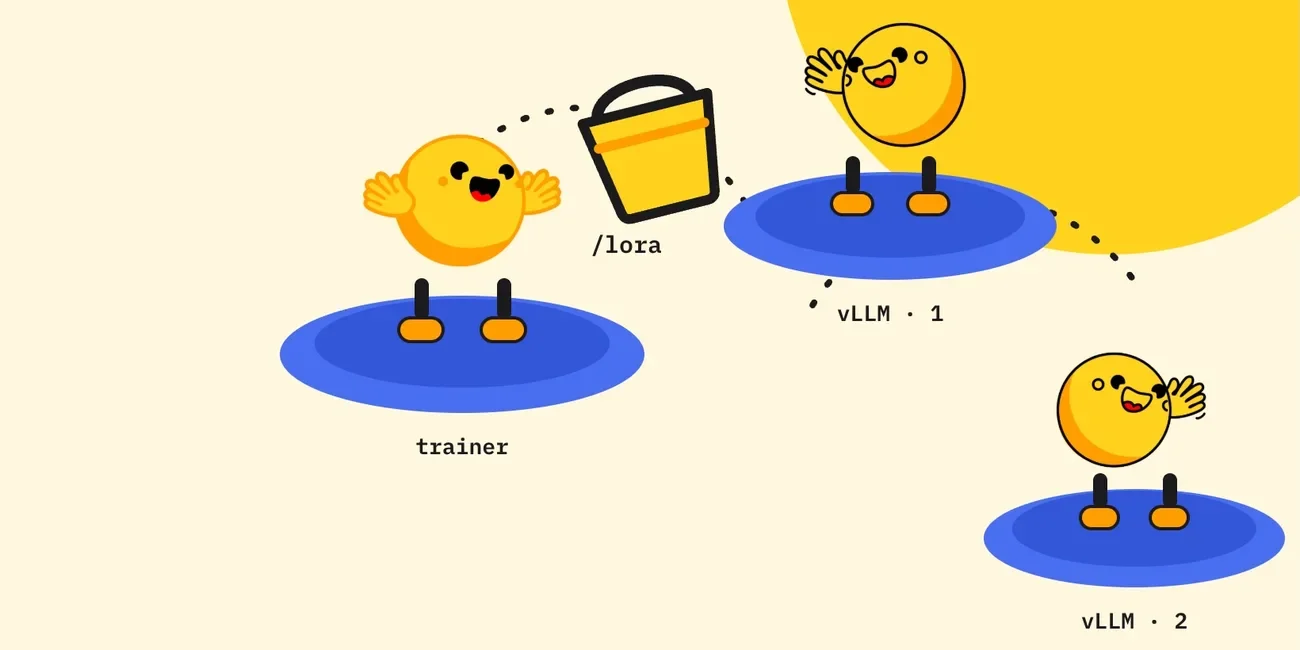
A new AsyncGRPO workflow separates training from rollout generation by moving compact LoRA adapters through shared storage. The design shows how versioning, cache-aware routing, and explicit consistency rules can replace assumptions built into a tightly coupled cluster.
A September community tutorial builds a small collection of Hugging Face repository metadata. The useful ideas extend beyond the example: preserve raw responses, distinguish missing values and record collection boundaries.
Article·4 min
Explore releases and guides from 2024 onward. Dates refer to the original announcements; each article also shows when our coverage was published. How we cover the ecosystem ↗
 Article·5 min