EXPLORE THE ECOSYSTEM
Inference
Local AI, faster kernels, and getting models into applications.
30 articlesNewest announcements first

A new public lookup connects popular Transformers checkpoints with reproducible AWS Trainium compatibility results. Its real value is faster technical triage—provided teams treat a passing run as a starting point, not a production benchmark.
llama.cpp now exposes decision models through a System One-compatible endpoint. Their constrained outputs can simplify routing and validation, but probabilities still require task-specific calibration and fallbacks.
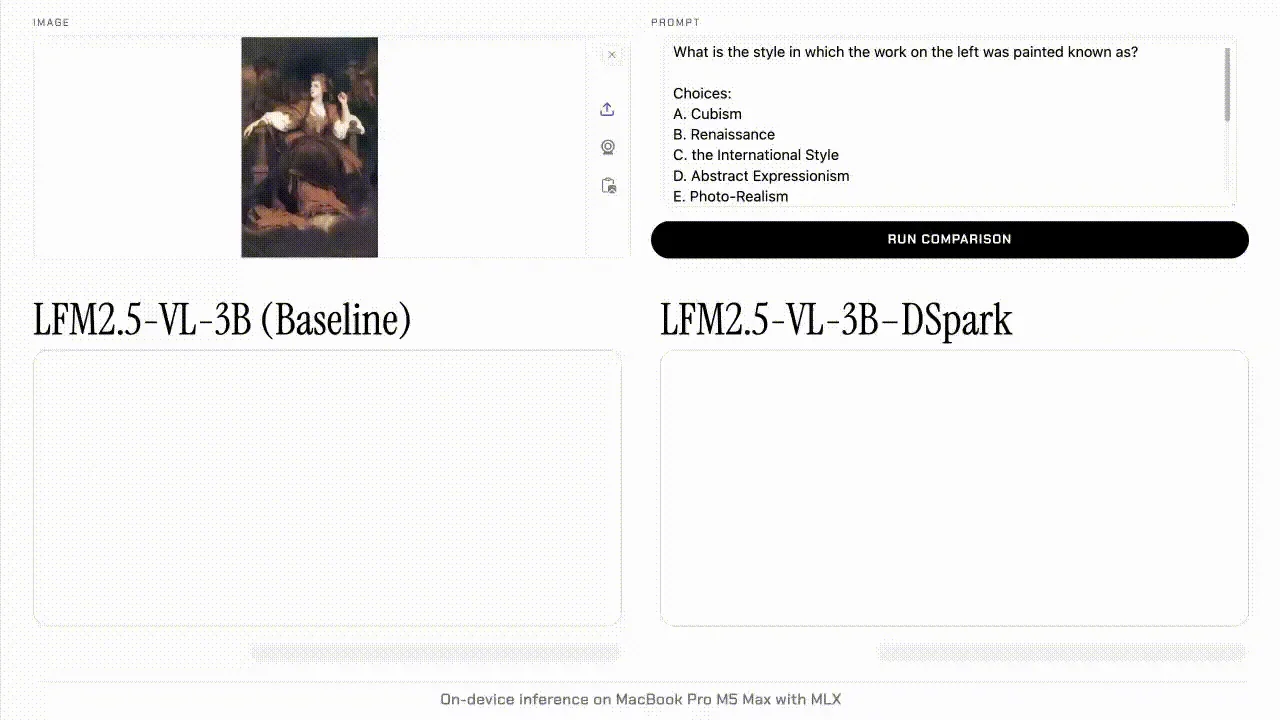
Liquid AI's compact draft model accelerates token generation for LFM2.5-VL-3B, but its real value depends on how much of a vision-language workload is spent decoding rather than processing images and prompts.
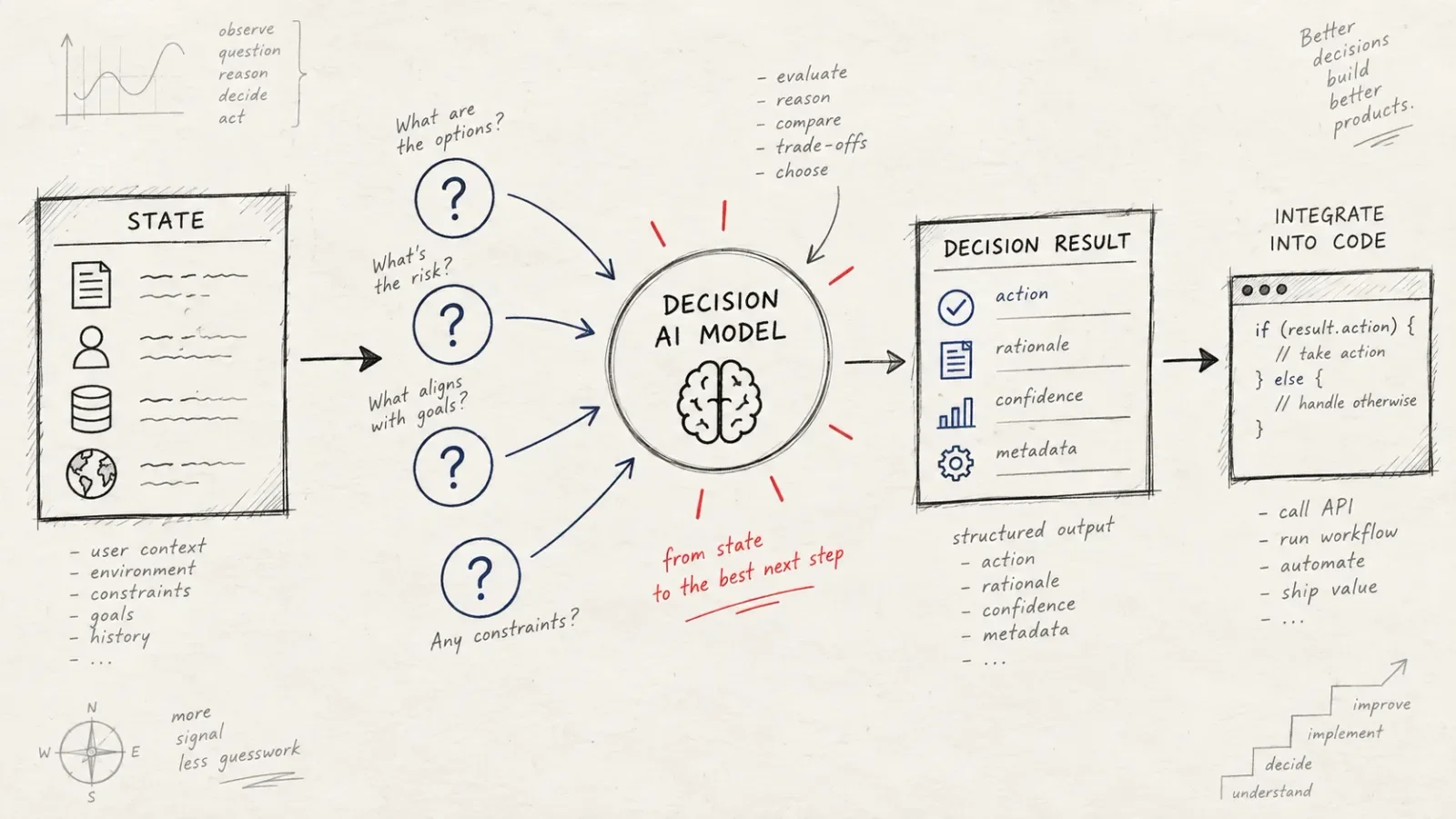
Jev turns bounded questions about text or structured state into typed signals. The harder engineering work is defining answer spaces, evaluation sets, escalation rules, and application-owned safeguards around those signals.
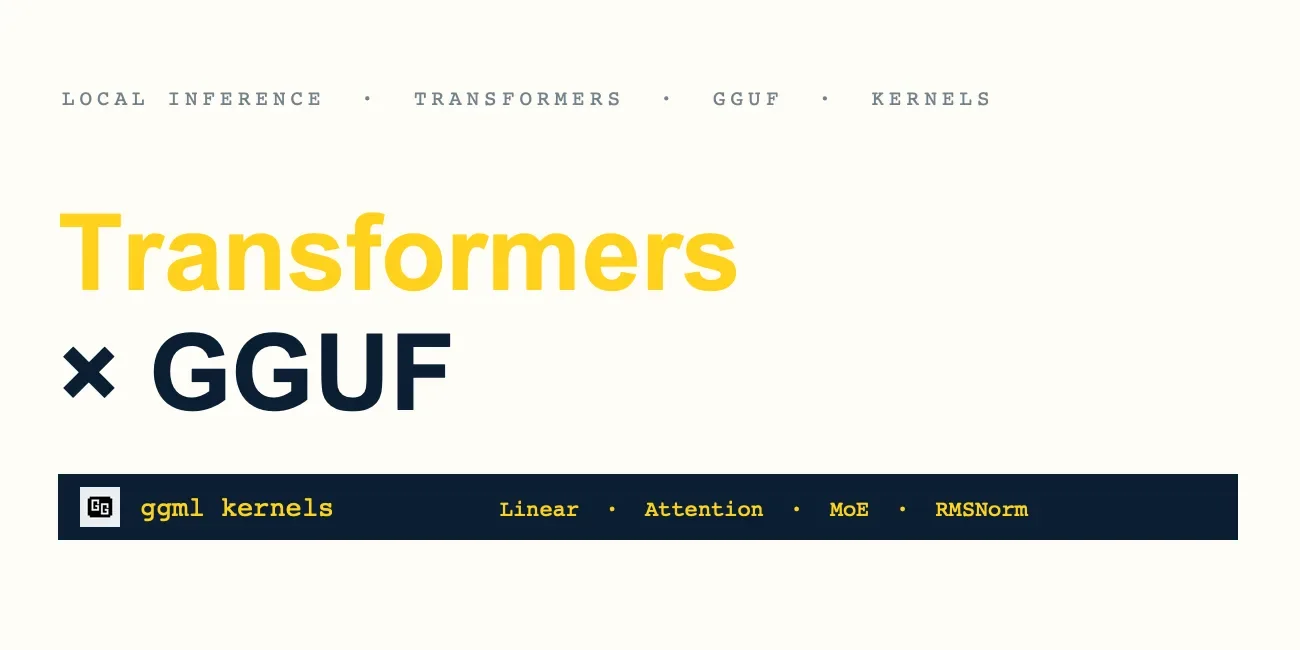
Native GGUF loading brings compact local checkpoints into familiar Transformers workflows, but hardware, kernel, architecture, and memory constraints still determine whether the packed path is the right choice.

oMLX maintainer Jun Kim is joining Hugging Face while continuing to lead the Apache-2.0 project. The move matters less as a change of ownership than as a test of how sustained maintenance can strengthen the wider MLX ecosystem.
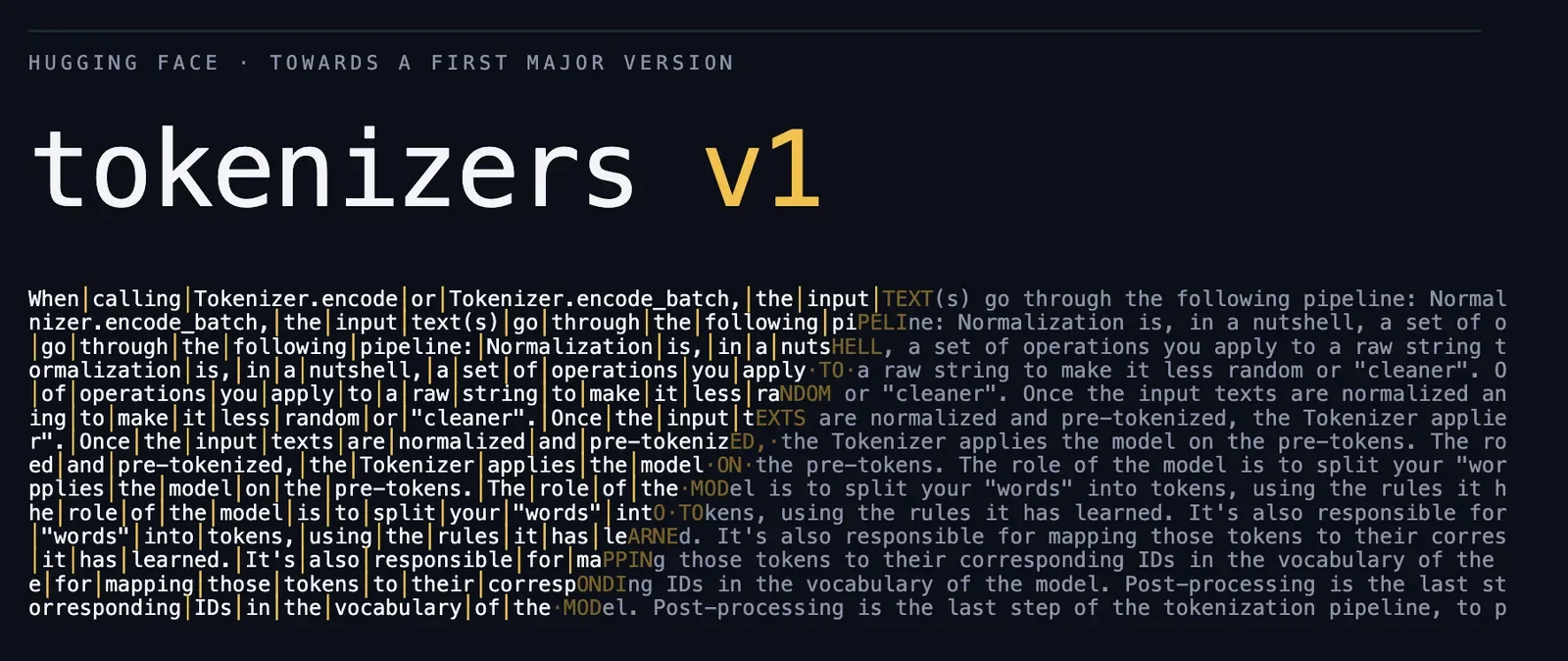
Hugging Face's Tokenizers v1 release candidate keeps token IDs and familiar APIs stable while rebuilding key Rust internals for faster encoding, better multicore scaling, and leaner inference-only deployments.
Optimum Intel 2.2 and OpenVINO GenAI 2026.4 broaden local AI support, but their more important lesson is how to evaluate an end-to-end deployment path across export, compression, execution, serving, and measurement.

A September 14 community report on AutoRound offers a useful reminder: matching file sizes does not mean two quantized models preserve the same behaviour.
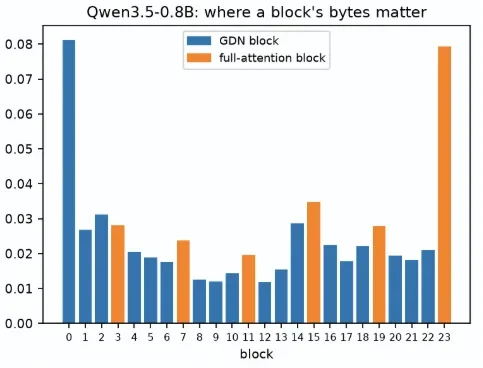
Bartowski’s September 10 experiments explore tensor-specific precision choices. The practical lesson is to compare allocation strategies at a matched memory budget and validate on your workload.
 Article·5 min