Kandinsky Lab’s KVAE-3.0 applies feature alignment to image, video, and stereo-audio tokenizers. Its broader lesson is that teams should evaluate a latent representation by reconstruction, downstream generation, compute shape, and domain-specific failure modes together.
An LTX-2.5 experiment on AWS Trainium3 shows why video-generation performance depends as much on graph shapes, host orchestration, and shot planning as on raw accelerator capacity.
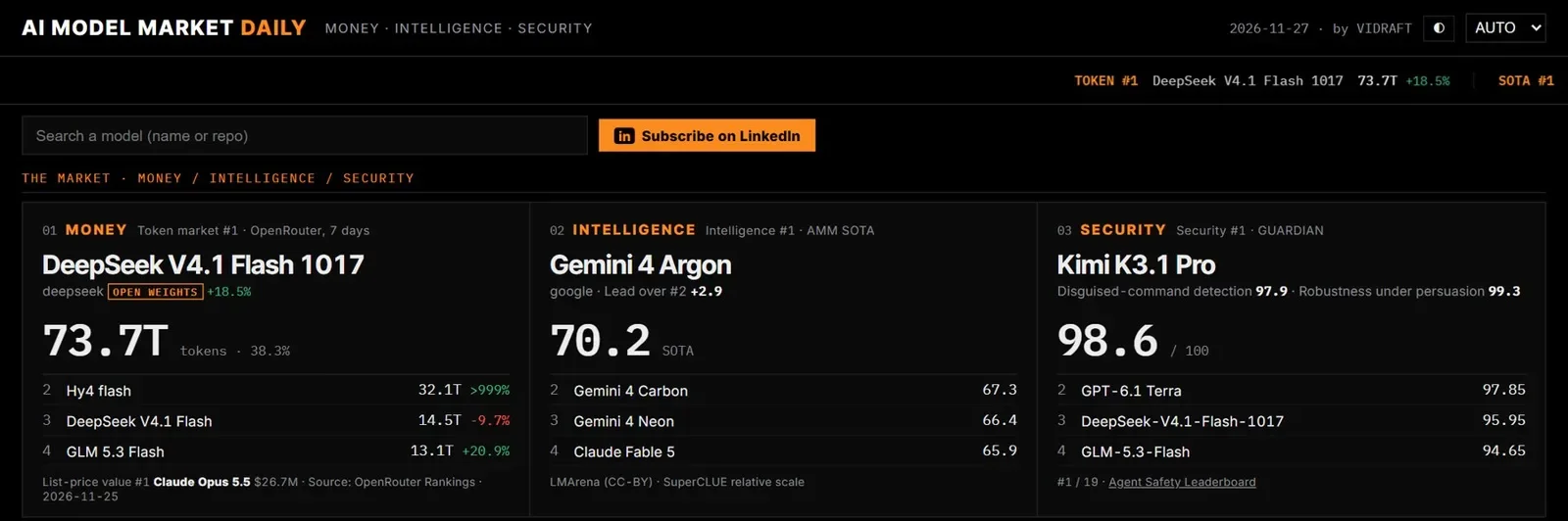
AI Model Market Daily separates capability, adoption, and security instead of compressing model selection into one leaderboard. Here is how to read that design without mistaking a composite score for a deployment decision.
A new four-agent reinforcement-learning experiment shows how a shared small model can learn to exchange private information. The larger lesson is methodological: compare coordination against retries at equal budgets, and track messages, tokens, and success together.
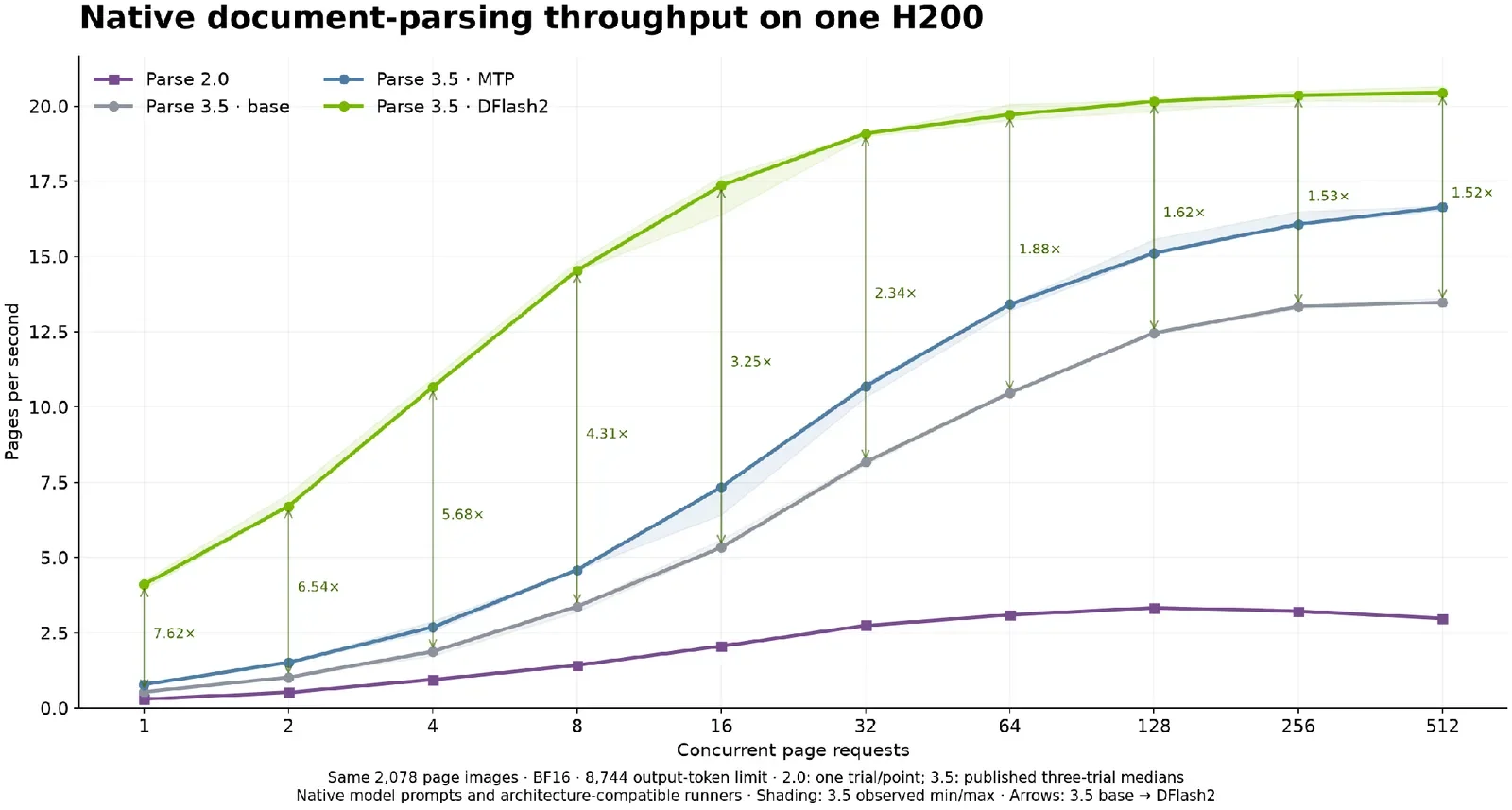
NVIDIA's Nemotron Parse 3.5 release combines open synthetic data, supervised fine-tuning, verifiable rewards, and speculative decoding. The useful lesson is how to design document extraction as a measurable system rather than a single model call.
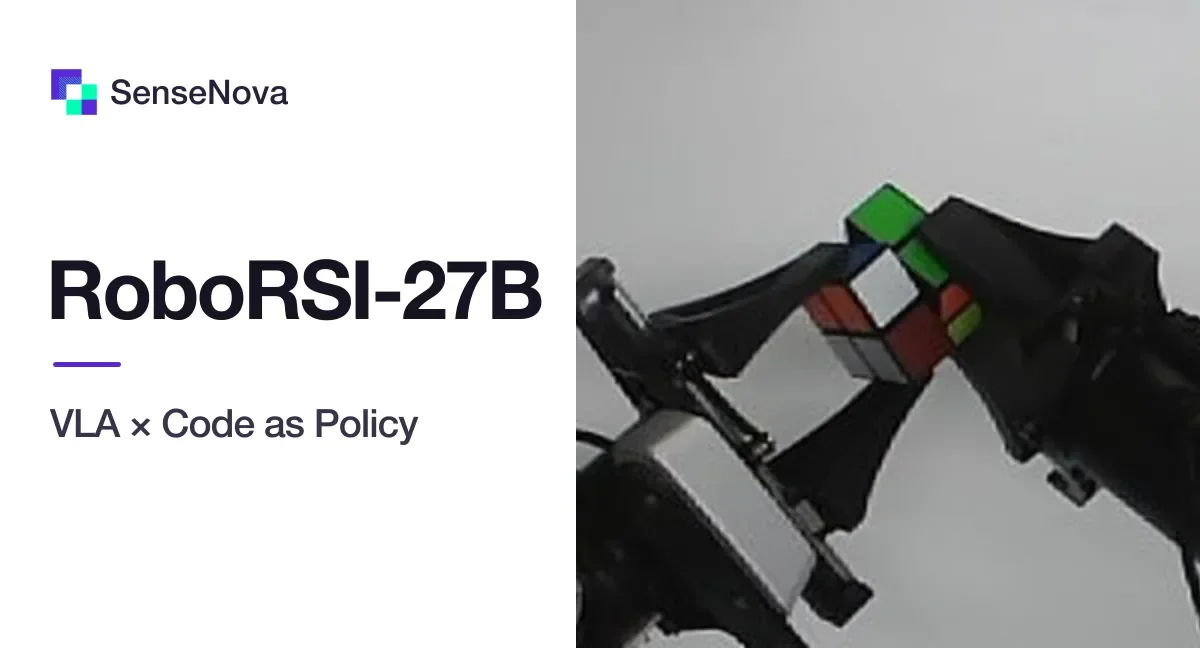
SenseNova-RoboRSI pairs a vision-language-action policy with programmatic motion control, illustrating how robot agents can separate fluid movement from precise correction and recovery.
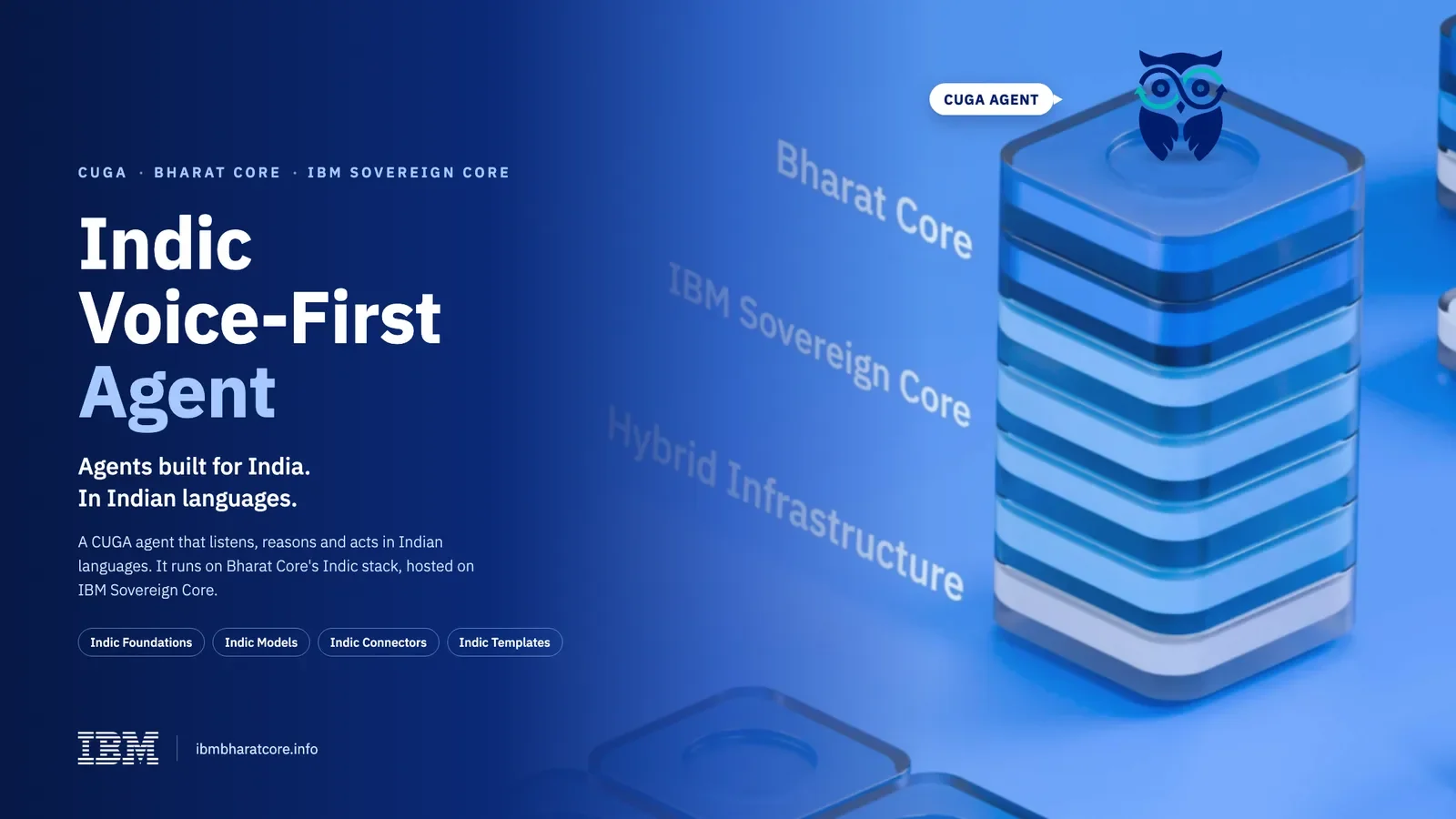
IBM Research's CUGA farming assistant shows that voice is only the interface layer. The decisive engineering work lies in cross-lingual retrieval, grounded answers, spoken-output design, and testable safety boundaries.
A study of looped language models separates current-token refinement from the value of deeper KV states, then uses that distinction to overlap recurrent work across decoding steps.
Wonder Agent turns a local Gemma pipeline into a useful design case study: optimize the child’s complete interaction, treat offline as a provisioning model, and validate every model-device combination rather than trusting conversion alone.
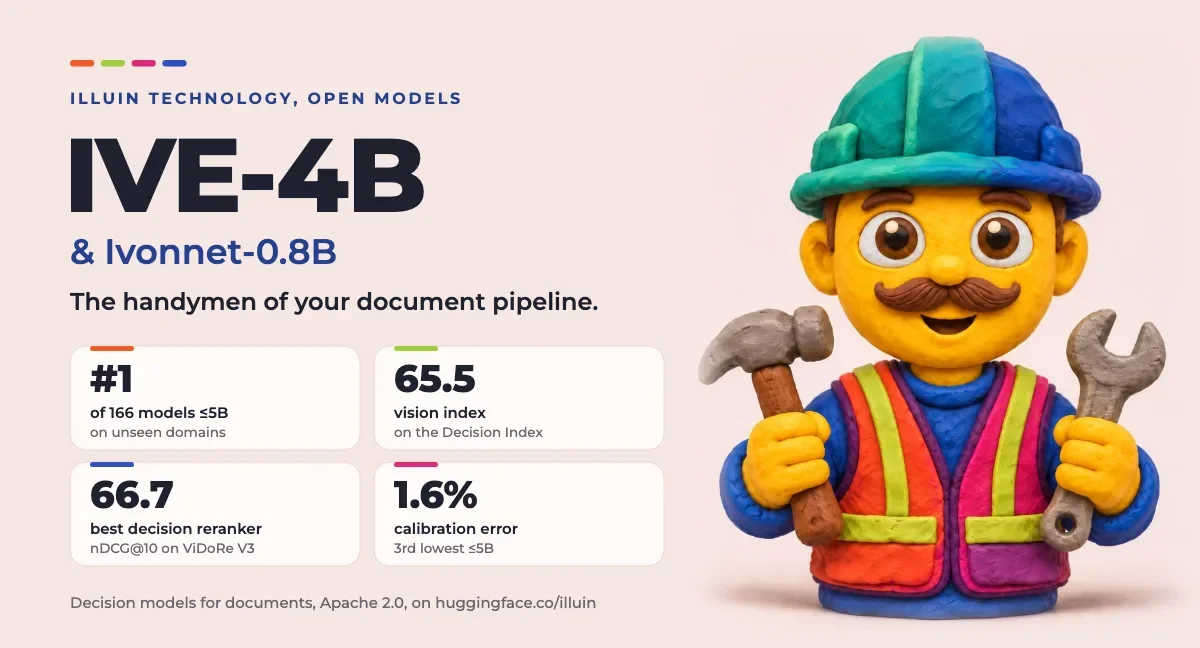
IVE-4B and Ivonnet-0.8B turn document tasks into scored choices rather than generated text. The design can simplify routing, extraction, and reranking, but deployment still requires threshold, calibration, and domain-shift tests.
Article·6 min
Explore releases and guides from 2024 onward. Dates refer to the original announcements; each article also shows when our coverage was published. How we cover the ecosystem ↗
 Article·6 min