IBM Research's CUGA farming assistant shows that voice is only the interface layer. The decisive engineering work lies in cross-lingual retrieval, grounded answers, spoken-output design, and testable safety boundaries.
A study of looped language models separates current-token refinement from the value of deeper KV states, then uses that distinction to overlap recurrent work across decoding steps.
Wonder Agent turns a local Gemma pipeline into a useful design case study: optimize the child’s complete interaction, treat offline as a provisioning model, and validate every model-device combination rather than trusting conversion alone.
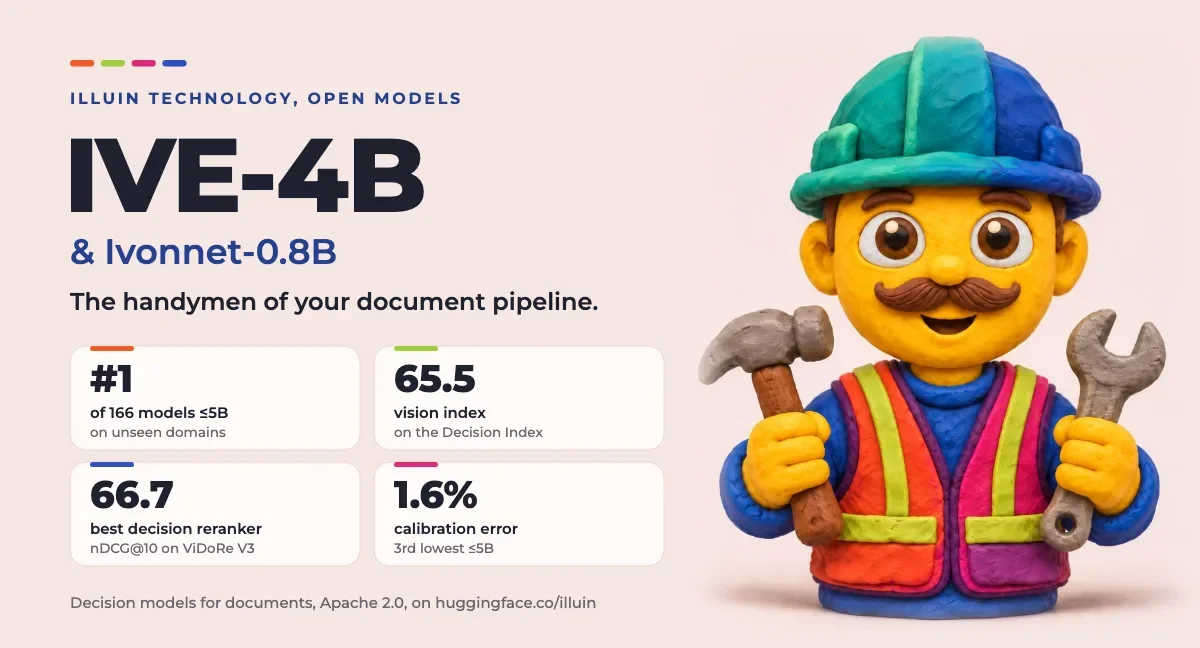
IVE-4B and Ivonnet-0.8B turn document tasks into scored choices rather than generated text. The design can simplify routing, extraction, and reranking, but deployment still requires threshold, calibration, and domain-shift tests.
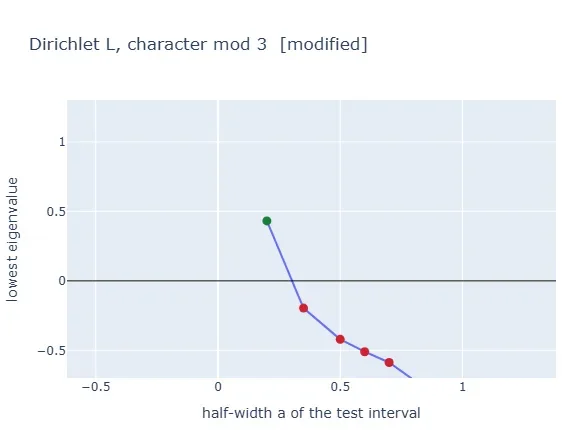
A new community-built Space turns Weil’s positivity criterion into an interactive spectral experiment. Here is how to read its eigenvalue results, controls, convergence checks, and important limits.
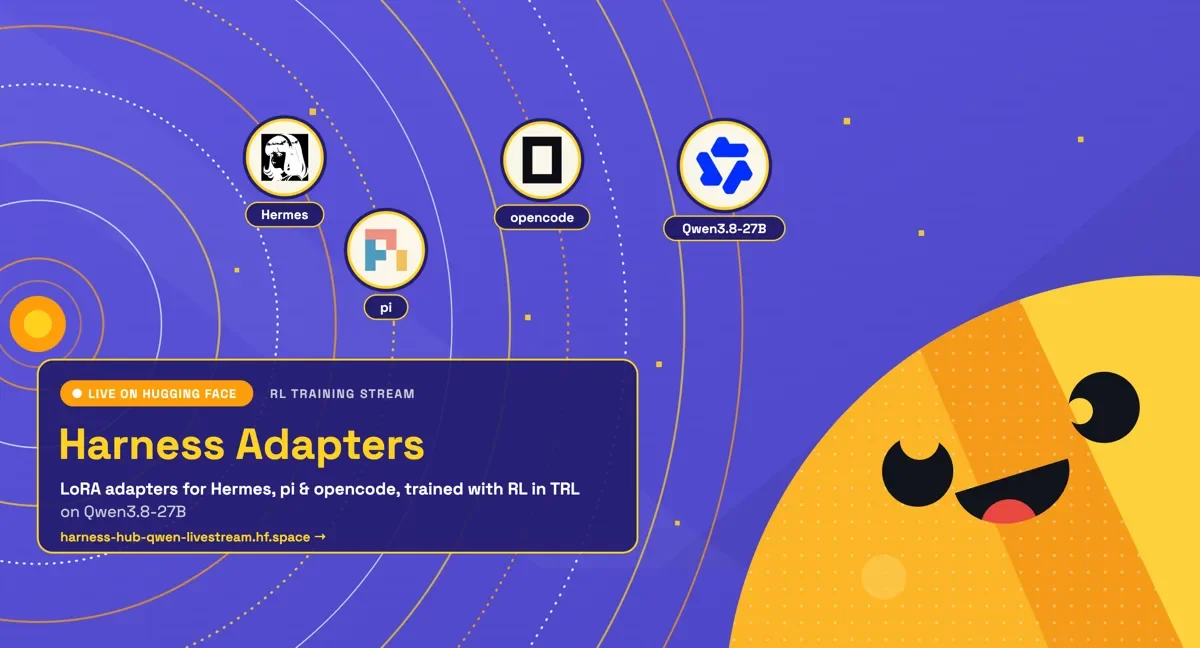
New harness adapters for Qwen3.8-27B show that reinforcement learning can improve both task success and tool efficiency when training matches the deployed agent loop. The harder question is how much of that gain survives a different harness, task mix, or reasoning mode.
Inkling 2 Mini uses a looped mixture-of-experts architecture to trade stored weights for repeated computation. Here is how to reason about that design, its deployment options, and the tests that matter before adopting it.
Metric-AI's Ayb 0.5 release offers three Armenian-adapted model sizes. The important story is not one leaderboard position, but a practical path for evaluating tokenization, language coverage, instruction following, and deployment tradeoffs.
OhanASR provides separate offline and streaming models for Armenian speech recognition. Its benchmark breakdown and stated limitations offer a practical starting point for choosing a model and designing an evaluation that reflects real audio.
Metric AI's OhanTTS-v0.1 focuses on Armenian while offering multilingual synthesis, short-sample voice cloning, and streamed audio for latency-sensitive applications.
Article·6 min
Explore releases and guides from 2024 onward. Dates refer to the original announcements; each article also shows when our coverage was published. How we cover the ecosystem ↗
 Article·6 min